
Table of Contents
Highlights
- Platform (CDP) centralizes customer data from multiple sources into a single customer profile.
- CDPs help businesses deliver personalized marketing, improve customer experiences, and increase conversion rates
- They enable real-time audience segmentation and omnichannel marketing
- CDPs support better decision-making by providing a unified view of customer behavior
- Popular CDP solutions include MoEngage, WebEngage, Segment, Salesforce Data Cloud, Tealium, and Insider One
Introduction
Today’s customers interact with brands through multiple touchpoints, including websites, mobile apps, social media, email campaigns, loyalty programs, customer support channels, and physical stores. While this creates valuable data, it also introduces a significant challenge: customer information often exists in disconnected systems.
As a result, businesses struggle to understand the complete customer journey, leading to inconsistent experiences, ineffective marketing campaigns, and missed revenue opportunities.
This is where a Customer Data Platform (CDP) comes into play.
A CDP helps organizations collect, unify, analyze, and activate customer data from various sources, allowing them to create personalized experiences and make smarter business decisions.
In this blog we will discuss everything about CDP, why businesses require a CDP solution, full force of Omni-channel deployment & the most popular CDP’s in the market.
What is a CDP
A Customer Data Platform (CDP) is software designed to collect customer data from multiple online and offline channels, consolidate it into a single customer view, and make that information accessible for marketing, analytics, and customer engagement activities.
Unlike traditional databases that store information in silos, a CDP creates a centralized and persistent customer profile.
For example, a CDP can combine data such as:
– Website visits
– Mobile app activity
– Email interactions
– Purchase history
– Loyalty program activity
– Survey responses
– Customer service interactions
– Social media engagement
All of this information is merged into one comprehensive profile, giving businesses a clearer understanding of each customer.
Why do Businesses need CDP
Without a CDP, customer data is often fragmented across different systems.
A marketing team might use one platform, customer support another, and the loyalty program a completely different solution. This fragmentation makes it difficult to understand customer behavior and deliver personalized experiences.
A CDP solves this problem by creating a unified customer view, enabling businesses to:
- Understand customers better
- Improve marketing effectiveness
- Increase customer retention
- Deliver personalized experiences
- Make data-driven decisions
- Improve return on marketing investment (ROI)
How Does a CDP Work?
A CDP typically follows four key steps:
- Data Collection: The platform gathers customer data from multiple sources, including:
- Websites
- Mobile applications
- CRM systems
- E-commerce platforms
- POS systems
- Email marketing tools
- Loyalty programs
- Customer feedback platforms
- Identity Resolution: The CDP identifies and matches data belonging to the same customer.
For example:
- User logs into mobile app
- Browses products on website
- Makes a purchase in-store
The CDP links all these interactions into one customer profile.
- Audience Segmentation: Businesses can create audience groups based on behaviors and attributes such as:
- Frequent shoppers
- Cart abandoners
- High-value customers
- First-time visitors
- Loyalty program members
- Activation: The CDP sends audience data to various marketing channels, enabling personalized engagement through:
- SMS
- Push notifications
- Social media advertising
- Website personalization
How a CDP Helps Your Business
A CDP provides a complete view of customer interactions across channels.
Businesses can understand:
- What customers buy
- How often they engage
- Which channels they prefer
- What content interests them
All of this leads to more informed business decisions.
So, a CDP helps businesses deliver:
- Personalized product recommendations
- Customized offers
- Relevant content
- Targeted promotions
Instead of sending the same message to everyone, marketers can target specific audience segments with greater precision. All of this leads to:
- Higher open rates
- Improved click-through rates
- Increased conversions
- Reduced marketing waste
- Stronger customer retention
Retaining existing customers is often less expensive than acquiring new ones. A CDP helps identify:
- At-risk customers
- Inactive users
- High-value customers
Businesses can then launch retention campaigns based on customer behaviour.
Omni-channel Customer Experiences:
Customers may start browsing on a mobile app, continue on a website, and complete a purchase in-store. A CDP ensures that customer interactions remain consistent across every touchpoint.
Common CDP Use-Cases:
- Personalized Email Campaigns: This allows you to send customized offers based on:
– previous purchases
– browsing behaviour
– product interests
2. Cart Abandonment Recovery: Automatically identify shoppers who abandon their carts and trigger reminders through:
- SMS
- Push Notifications (Website & In-App)
3. Loyalty Program Management: You can create targeted campaigns to improve retention & loyalty participation
- frequent customers
- reward members
- VIP customers
4. Cross-selling & Upselling: Recommend complemtnary products based on purchase history.
For example, a customer purchases running shoes, the CDP can trigger promotions for:
- Sportswear
- Fitness Accessories
- Smart Watches
5. Customer Journey Automation: Businesses can automate customer interactions across the entire lifecycle for
- welcome campaigns
- engagement campaigns
- retention campaigns
- win-back campaigns
6. Retail & Shopping Mall Marketing: This sector can use CDP’s to:
- Understand visitor preferences
- Promote relevant stores
- Personalize events & offers
- Improve loyalty program engagement
- Measure customer journeys across Digital & physical touchpoints
Popular CDP Platforms
Its very important to choose the right CDP platform for your business. Depending on your requirement & use-case, you need to evaluate all the features, roadmap, customer reviews, Gartner Rating, & the overall proposal that you will receive from the CDP solution.
Here are some popular CDP solutions:
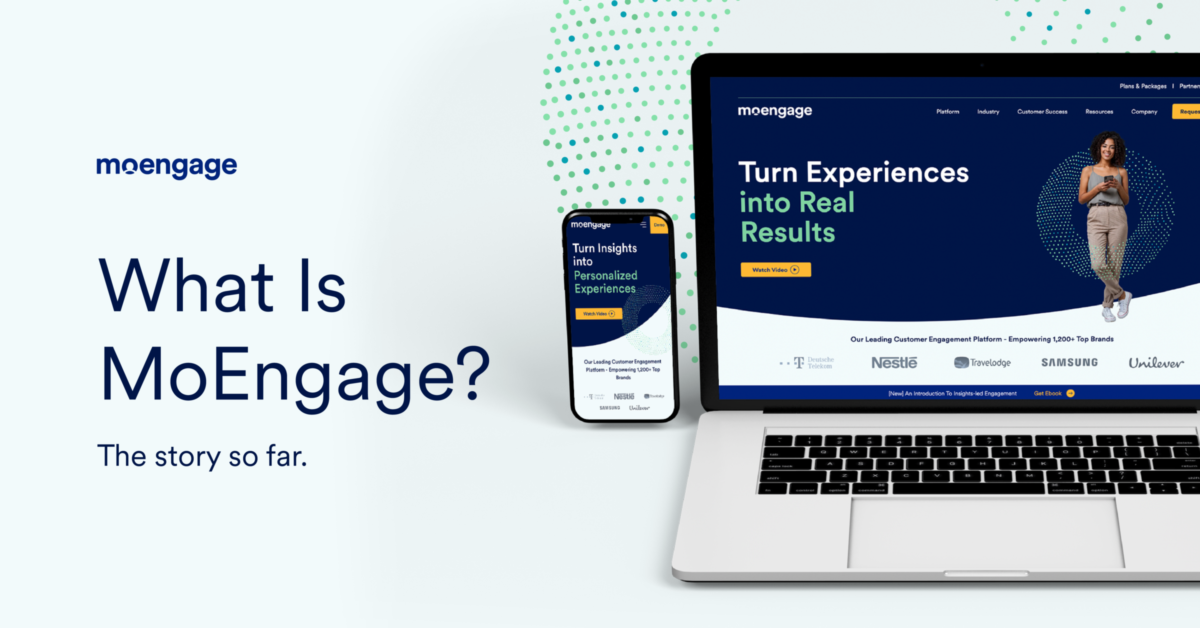
- MoEngage: A very popular CDP platform that combines customer data management, engagement automation, analytics, and personalization in a single platform.
Key Strengths:
- Easy to use interface
- Advanced customer journeys
- AI-powered insights
- Strong mobile engagement capabilities
Best for:
- B2C brands
- Retail
- Ecommerce
- Shopping Malls
- Financial Services
- Mobile-first businesses
2. WebEngage: This platform focuses on customer engagement through omnichannel marketing and journey orchestration.
Key Strenghts:
- Real-time segmentation
- Campaign automation
- Multi-channel engagement
- Strong customer lifecycle management
Best for:
- Retail
- Ecommerce
- Fintech
- Travel
- Consumer brands
3. Salesforce Data Cloud: This powerful platform unifies customer data across Salesforce products and external systems.
Key Strenghts:
- Enterprise-grade scalability
- AI-powered insights
- CRM integration
- Advanced analytics
Best for:
- Large enterprises
- Companies already using Salesforce solutions
4. InsiderOne: This platform combines CDP capabilities with personalization and AI-driven customer engagement.
Key Strengths:
- Predictive segmentation
- Customer journey orchestration
- Website personalization
Best For:
- Retail
- Ecommerce companies
Challenges to consider before implementing a CDP
While CDPs offer substantial benefits, businesses should consider:
- Data quality and accuracy
- Privacy and compliance requirements
- Integration complexity
- Internal resource availability
- User adoption and training
A successful CDP implementation requires clear objectives, defined KPIs, and strong collaboration between marketing, IT, data, and customer experience teams
Conclusion
Customer expectations are evolving rapidly, and businesses can no longer afford to operate with fragmented customer data.
A Customer Data Platform (CDP) provides a unified view of customers, enabling organizations to create personalized experiences, improve marketing performance, automate customer journeys, and build stronger relationships across every touchpoint.
Whether you’re a retailer, e-commerce business, shopping mall, financial institution, or service provider, investing in the right CDP can transform how you understand and engage your customers.
As competition increases and personalization becomes the norm, businesses that leverage customer data effectively will be better positioned to drive growth, loyalty, and long-term success.
Subscribe to our Newsletter to stay updated on all news related to this topic. If you have any questions, email us at mail@digital-doorway.com
Need Help?
Interested in scaling your business or get started in Digital Marketing?